

Nike nike running sneakers: Find Your Perfect Pair for Comfort and Speed

When you lace up a pair of Nike running shoes, you're stepping into decades of engineering designed for one purpose: to make your run better. Whether you're chasing a personal best or just enjoying a few easy kilometres, the technology under your foot plays a huge role. The secret lies in Nike's signature foam and air systems, like the super-responsive ZoomX and the durable, comfortable React foam. Getting to know these is the first step in finding your perfect pair.
Understanding Nike Running Shoe Technology
Ever wondered what creates that distinct feeling—the bounce, the softness, the stability—in a Nike running shoe? It's not magic; it’s a meticulously designed system of foams and air units built into the midsole, which is essentially the engine of the shoe.
This isn't about finding the single "best" technology, because there isn't one. It’s about matching the right engine to your type of running. A marathoner needs something entirely different from a casual jogger. Once you understand the core components, you can look past the slick designs and colours to find a shoe that truly supports your goals.
The Foundation: Cushioning Foams
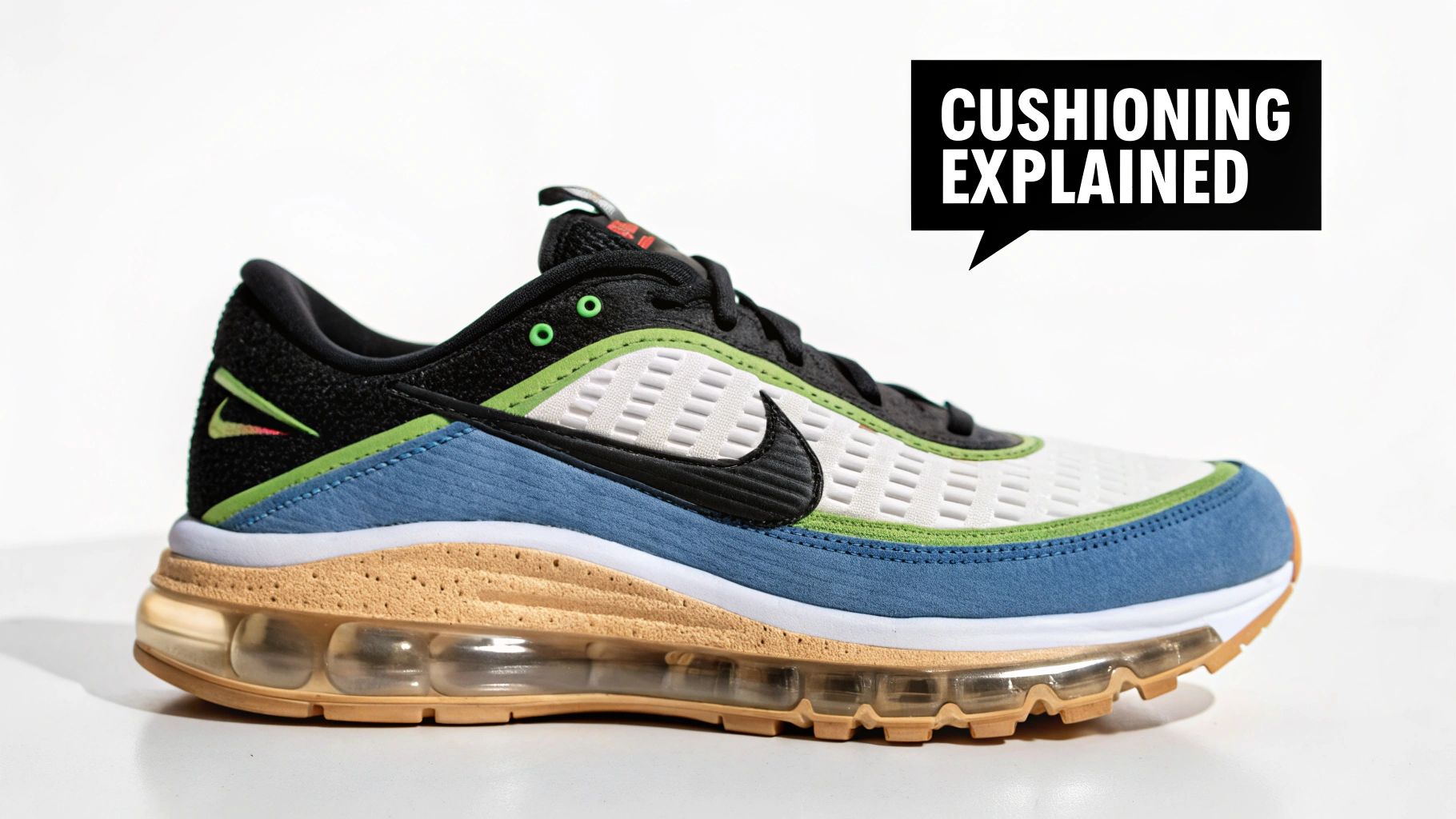
At the heart of almost every Nike running shoe is its foam. Think about the difference between jumping on a trampoline versus sinking into a memory foam mattress. One springs you back up with explosive energy, while the other softly absorbs the impact. Nike's foams work along a similar spectrum.
- ZoomX Foam: This is Nike's top-tier racing foam. It's ridiculously lightweight and offers the highest energy return in their lineup, giving you a propulsive, bouncy ride. This is your trampoline—built for speed and efficiency when it matters most.
- React Foam: The reliable workhorse. React foam strikes a fantastic balance between soft cushioning and springy responsiveness. It’s also incredibly durable, making it the perfect choice for daily trainers that need to log hundreds of miles. Think of it less as a trampoline and more as a high-performance, supportive mattress.
This map helps visualise how Nike’s technologies align with the core needs of every runner: comfort, speed, and durability.
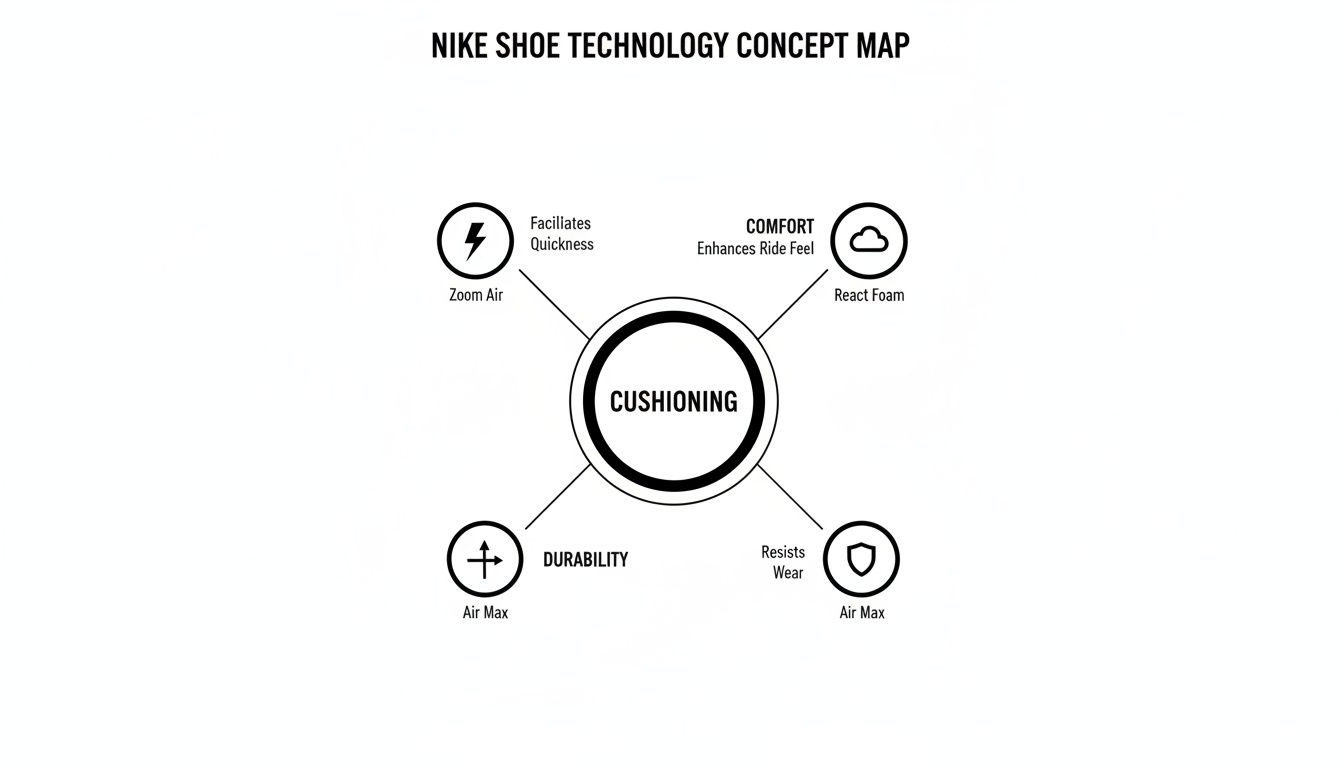
As you can see, something like ZoomX is all about propulsion and speed, while React is engineered to deliver a blend of comfort and resilience for the long haul. To make it even clearer, here’s a quick breakdown of what each technology is built for.
Nike Running Technology at a Glance
| Technology | Key Benefit | Best For |
|---|---|---|
| ZoomX Foam | Maximum energy return & lightweight speed | Racing, speed work, tempo runs |
| React Foam | Durable, responsive cushioning & a smooth ride | Daily training, long runs, all-around use |
| Zoom Air | Snappy, propulsive feel for a quick toe-off | Faster-paced runs, responsiveness |
This table shows that choosing the right tech is really about defining your primary goal for that shoe, whether it's setting a new record or just getting your daily miles in comfortably.
The Role of Zoom Air
On top of these foundational foams, Nike often adds its legendary Air technology. Zoom Air units are small pods of pressurised air, usually placed in the forefoot or heel of the midsole.
Unlike foam that simply compresses under pressure, Zoom Air units contain tightly stretched tensile fibres. When you land, these fibres absorb the impact and then snap back with incredible speed, giving you a quick, snappy sensation that helps you push off the ground faster.
It's this clever combination of soft foams and responsive air units that gives so many Nike models their unique and sought-after feel. These innovations have become a global sensation, helping drive Nike's footwear revenue in the Asia Pacific & Latin America region to around 4.9 billion U.S. dollars in the 2024 fiscal year. In warmer climates, features like cushioned midsoles and breathable uppers are especially valued. If you're interested in how materials affect performance in different weather, you might want to read our guide on comparing fabrics for different weather conditions.
Matching the Right Nike Sneaker to Your Run
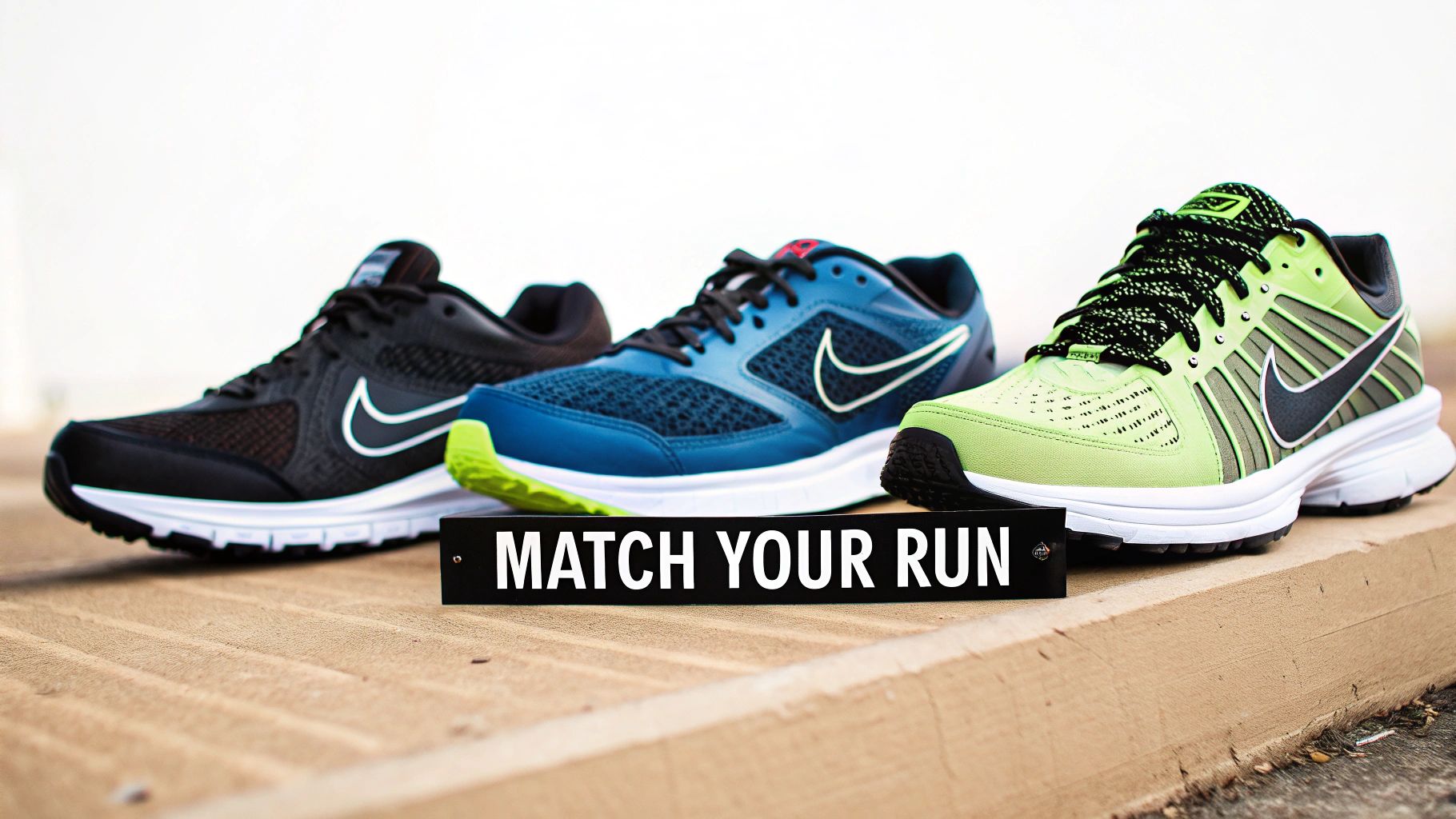
When it comes to picking the right Nike running shoes, it’s not really about the colour. It’s about matching the shoe’s DNA to your personal running habits. A shoe engineered for a blistering 5K will feel worlds apart from one built to cushion your feet during a long, slow Sunday jog. The first, most important step is to be honest with yourself about the kind of running you actually do.
Think of Nike's massive collection of runners as a specialist's tool kit. You wouldn’t use a delicate screwdriver to hammer in a nail, right? In the same way, taking a featherlight race-day shoe out for your daily grind will wear it out fast and probably won't feel great. On the flip side, a heavy-duty trainer will feel like a boat anchor when you’re trying to pick up the pace.
Identifying Your Primary Running Style
Most of us have a go-to running style that makes up the bulk of our weekly miles. Figuring out yours is the secret to cutting through the noise of Nike’s huge catalogue and finding the perfect match.
Let’s break it down into the main categories.
-
Daily Training: These are your workhorses, the shoes for the bread-and-butter runs that build your base fitness. They need to be a jack-of-all-trades, striking a perfect balance between cushioning, durability, and a bit of spring in their step. The Nike Pegasus is the poster child for this category—a true legend known for its dependable, do-it-all performance.
-
Speed Work and Racing: When you’re chasing a personal best, whether in a tempo run, on the track, or on race day, you need a shoe that feels like it’s barely there. Lightweight construction and maximum energy return are the name of the game. This is where models like the Nike Vaporfly and Alphafly shine, using their special ZoomX foam and carbon-fibre plates to propel you forward.
-
Long, Easy Runs: Comfort is non-negotiable on those long, scenic routes or recovery days. You’re looking for plush cushioning that can soak up the impact, kilometre after kilometre, and keep your legs feeling fresh. The Nike Vomero is a fantastic choice here, offering a soft, pillowy ride that’s built for the long haul.
-
Trail Running: Hitting the trails? You’ll need a different beast altogether. Trail shoes demand serious grip, tough materials, and extra protection from rocks and roots. Nike’s trail lineup, featuring shoes like the Wildhorse and Pegasus Trail, comes equipped with rugged outsoles and reinforced uppers designed to tackle unpredictable terrain.
Understanding Pronation and Stability
Beyond what kind of runs you do, how your foot moves is a huge piece of the puzzle. This movement is called pronation—it's simply the natural inward roll of your foot when you land. It's your body's built-in shock absorption system, but everyone does it a little differently.
Some runners overpronate, which just means their foot rolls inward a bit more than average. This can sometimes put extra strain on the shins or knees. For these runners, a stability shoe can be a game-changer, offering a bit of gentle guidance to keep everything aligned.
A stability shoe works like a subtle guardrail for your foot. It doesn’t force a correction but provides medial support on the inner side of the shoe to gently reduce the degree of inward roll, promoting a more neutral foot strike and enhancing comfort over the miles.
Nike builds stability features into many of its most popular models. Figuring out your pronation type is pretty easy—a specialist running shop can analyse your gait, or you can even do a simple "wet test" at home. This little bit of self-knowledge helps you choose a shoe that works with your body, not against it. While most people do just fine in neutral shoes, those who need that extra support will feel an incredible difference.
You can also explore our article about the iconic Nike Air Force 1 to learn more about another classic Nike design.
How to Get the Perfect Fit and Sizing
You can have the most advanced foam on the planet under your feet, but it’s all for nothing if the shoe doesn’t fit. A poor fit is a fast track to everything from irritating blisters to sidelining injuries. Nailing the right size in your Nike running sneakers is easily the most important thing you can do to guarantee comfort and performance right out of the box.
Don't assume your usual size will translate perfectly across Nike's running lineup. A sleek racing shoe like the Vaporfly is built for a snug, performance fit, which feels worlds away from a daily workhorse like the Pegasus. That’s why you have to go by feel, not just the number on the box.
Measuring Your Feet at Home
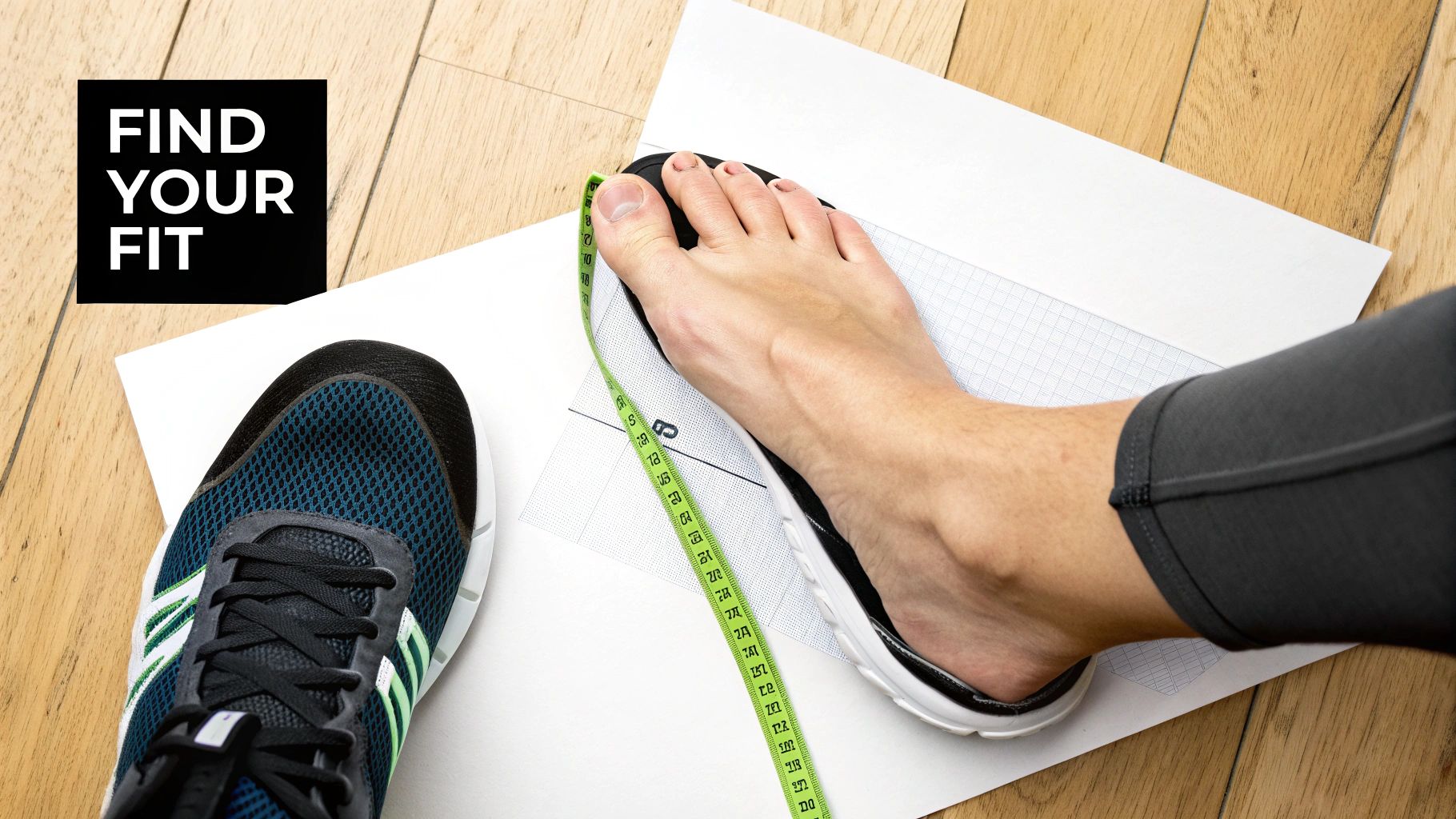
Before you start browsing, it's a great idea to get a fresh measurement of your feet. Try to do it later in the day, like in the late afternoon or evening. Feet swell over the course of the day, so measuring them at their largest helps you sidestep the classic mistake of buying shoes that end up feeling too tight.
Here’s a simple way to get it done:
- Grab a piece of paper and place it on a hard floor, flush against a wall.
- Stand on the paper, making sure your heel is pressed firmly against the wall.
- Have someone else mark the tip of your longest toe (or do your best to bend over and do it yourself).
- Measure the distance from the edge of the paper to that mark. That's your foot length.
And don't forget about width! If you often feel a squeeze on the sides of your feet in standard-width shoes, you'll want to specifically look for models offered in a wide fit. Many popular Nike running sneakers come in wider options for this very reason.
What the Perfect Fit Feels Like
Alright, you've got the shoes. Now for the moment of truth. A great fit should feel secure without being restrictive. I like to think of it as a firm, confident handshake for your foot—it’s supportive, not suffocating.
Your heel should feel locked in, with zero slipping up and down as you walk. The midfoot area needs to feel snug and held in place, but without any uncomfortable pressure points. Critically, you need about a thumb's width of space between your longest toe and the end of the shoe.
That bit of extra room up front is non-negotiable. Your feet naturally expand and splay out when you run, and that space stops your toes from slamming into the front of the shoe—a notorious cause of black toenails for runners. Before you commit, take a walk or even a light jog around. If you feel any pinching or hotspots, it's a no-go. The right shoe should feel like it’s already a part of your foot, ready to go.
How to Care for Your Nike Running Sneakers
You've invested in a great pair of running shoes, and a bit of care can make all the difference in how they perform and how long they last. Think of it as protecting your investment. Proper maintenance safeguards those high-tech foams and engineered uppers, ensuring they deliver the goods run after run.
Let’s get the most important rule out of the way first: never put your running sneakers in the washing machine or dryer. It’s tempting, I know, but the intense heat and aggressive tumbling action can wreak havoc on the glues and foams. It’s the fastest way to kill the responsive feel of a ZoomX or React midsole for good.
Cleaning Your Sneakers the Right Way
Instead of resorting to the machine, a quick hand-washing routine is all you need to keep your shoes looking and feeling fresh. It’s gentle, effective, and won’t risk damaging the materials.
- Prep Work: Start by knocking the soles together to get rid of any caked-on mud and grit. An old toothbrush or a soft brush works wonders for scrubbing away any lingering dirt from the outsole grooves and the upper mesh.
- Create a Cleaning Mix: All you need is a bit of mild soap or laundry detergent mixed into a bowl of warm water. Steer clear of harsh chemicals like bleach, as they can discolour and weaken the shoe’s fabrics.
- Get Scrubbing: Dip your brush into the soapy water and gently work on the uppers and midsole. You don't need a lot of force, just consistent, gentle scrubbing.
- Rinse and Dry: Wipe everything down with a clean, damp cloth to remove any soap residue. The crucial last step is drying. Stuff them with newspaper or paper towels—this helps them hold their shape and pulls moisture out from the inside. Then just leave them to air-dry at room temperature, well away from direct heat or sunlight.
Knowing When to Replace Your Shoes
Even with the best care, no running shoe lasts forever. While a worn-down outsole is an obvious sign of wear and tear, the real reason to retire a pair is the invisible breakdown of the midsole cushioning.
Over hundreds of kilometres, the foam in the midsole gets compressed and loses its bounce. It can no longer absorb impact or return energy like it used to. If your legs and joints start feeling unusually sore after a run, or the shoes just feel "flat," that's your cue. The cushioning has packed out.
As a solid rule of thumb, most Nike running shoes will give you between 500 and 800 kilometres of solid performance. The best way to know for sure is to track your mileage in a running app or a simple log. This helps you anticipate when it’s time for a fresh pair, keeping you protected and running strong.
Where to Buy Authentic Nike Running Sneakers
In a world full of knock-offs, making sure you’re getting the real deal is non-negotiable for your performance, comfort, and even your safety. A fake pair of Nikes won't have the carefully engineered cushioning or support you're paying for, which can lead to anything from a miserable run to a nasty injury.
The simplest, most reliable way to guarantee authenticity is to go straight to the source.
Buying directly from Nike, either on their official website or in one of their physical stores, is the only way to be 100% certain you're getting a genuine product. You get the real shoe, backed by Nike’s proper customer service and return policy. No guesswork needed.
Spotting Authorised Retailers
Of course, Nike isn't the only legitimate place to shop. Many well-known sporting goods chains and department stores are authorised to sell genuine Nike gear because they have an official partnership.
So, how can you tell? Reputable retailers will often mention their authorised status. A big red flag is an unfamiliar website offering a brand-new model at a ridiculously steep discount. If a price seems too good to be true, it almost always is. Steer clear of these unauthorised sellers.
A genuine pair of Nike running sneakers is an investment in your health. Counterfeit products often use substandard materials that break down quickly, offering poor shock absorption and increasing your risk of injury. Learn more about why investing in quality footwear matters in our detailed guide.
Red Flags to Watch For Online
When you're shopping online, a few tell-tale signs can give away a shady seller. Be on the lookout for a poorly designed website, blurry or stolen product photos, and product descriptions riddled with typos and grammatical errors.
Another major warning sign is an unusually low price, especially on the latest and most popular models.
The global hunger for real Nike products is massive. During the 2020 pandemic, for instance, even as revenues in North America took a hit, demand in Latin American markets stayed strong, partly driven by people looking for at-home fitness gear. This incredible global appeal is exactly what fuels the counterfeit market, so it pays to be vigilant.
By sticking to trusted sources, you can be confident your purchase will actually support your running goals, not hinder them.
Your Top Nike Running Questions Answered
Even with all the details on tech and fit, a few questions always seem to come up. Let's tackle some of the most common ones to clear up any lingering doubts.
How Many Kilometres Will My Nikes Actually Last?
Most Nike running shoes are built to last somewhere between 500 and 800 kilometres. Think of this as a general guideline, not a strict expiration date.
The real lifespan of your shoes depends heavily on you—your running style, your weight, and where you run. A lightweight racing shoe like a Vaporfly might give you fewer kilometres than a workhorse daily trainer like the Pegasus.
The best way to know when it's time for a new pair isn't by tracking kilometres religiously. It's about how the shoe feels. If the midsole starts to feel dead and unresponsive, or you're getting new, unusual aches and pains after a run, that's your body telling you the cushioning is gone.
Can I Wear My Nike Trail Shoes on the Pavement?
You can, but I wouldn't make a habit of it. Trail shoes like the Nike Wildhorse are designed with deep, chunky lugs on the bottom for one reason: to grip onto unpredictable surfaces like mud, rocks, and dirt.
When you take that specialised design onto hard tarmac, a couple of things happen:
- They wear out fast. The soft rubber lugs that provide such great grip on trails will get chewed up quickly by the abrasive road surface.
- The ride feels strange. Those prominent lugs can feel unstable and just plain awkward on a perfectly flat road.
It's always best to keep your shoes in their element. Road shoes for the road, trail shoes for the trail. You'll get better performance and a much longer life out of both.
Do I Really Need to "Break In" My New Nikes?
Thankfully, the days of suffering through a painful "breaking-in" period are pretty much over. Modern running shoes, especially from Nike, are designed with advanced foams and uppers that feel great right out of the box.
That said, it’s still smart to ease into a new pair. Don't take them straight from the box to the starting line of a marathon. Wear them for a few shorter runs or even a few long walks first. This gives your feet a chance to get used to the new support and helps you notice any potential hotspots before they turn into full-blown blisters halfway through a long run.
Ready to find your perfect running partner? Explore the latest collection of high-performance footwear at PANTERA STORES and step up your run today. Find your perfect fit at https://panterastores.com.