

A Guide to Mastering Vintage Clothing Stores

Step into a vintage clothing store, and you're not just shopping—you're stepping into a fashion time capsule. These aren't your average second-hand shops; they're curated spaces filled with garments, shoes, and accessories that are typically between 20 and 100 years old. Each rack holds a piece of history, a story waiting to be told.
What Makes Vintage Clothing Stores So Special?
Think of it this way: walking into a vintage shop is like exploring a physical archive of fashion. It’s a world away from today's fast-moving trends. Here, you'll find the distinct silhouettes, fabrics, and incredible craftsmanship from decades gone by. Every item is a one-of-a-kind find, giving you a real, tangible connection to the past.
But the magic of vintage is about more than just looking back. It's a conscious decision to embrace individuality and sustainability. In a world of mass-produced fashion, choosing a vintage piece is a powerful statement. It's a nod to superior quality and construction—these clothes were made to last, not to be thrown away after a few wears.
The Different Kinds of Vintage Shops
You'll quickly discover that no two vintage stores are alike. They each offer a unique personality and shopping experience.
- Curated Boutiques: These are like fashion galleries. The owners are highly selective, often focusing on specific designers or eras. Every piece is hand-picked for its excellent condition and historical importance.
- Eclectic Treasure Troves: Get ready to dig! These shops are packed to the rafters with a wonderful, chaotic mix of items from all sorts of decades. It takes a bit more patience, but the thrill of finding that perfect, unexpected gem is unbeatable.
- Era-Specific Specialists: Some stores are completely dedicated to one period, like the rebellious 70s or the glamorous 40s. If you're drawn to a particular time, like the Roaring Twenties, our historical exploration of 1920s fashion trends can give you a deeper look into what makes that era so iconic.
At the end of the day, vintage clothing stores offer something more profound than just clothes. They provide a direct link to fashion history. Every garment has survived for decades, carrying with it a unique past and a level of quality that's hard to find today.
This is what makes vintage shopping such an adventure. It’s a hunt for pieces that truly speak to your personal style while helping you build a more sustainable and thoughtful wardrobe.
How to Decode and Authenticate Vintage Finds
Turning a trip to a vintage shop into a successful treasure hunt is all about learning to read the story a garment tells. It takes a bit of detective work, but once you know what to look for, you can confidently figure out any piece's age, quality, and real value.
This kind of know-how is more useful than ever. The second-hand market is booming—for example, Latvia's second-hand clothing sector grew at an annual rate of 1.9% between 2020 and 2025, even as general clothing sales took a nosedive. This just goes to show the lasting appeal of pre-loved clothes and why being able to spot a genuine find is a must-have skill for any savvy shopper. You can get the full picture on Baltic second-hand market trends to see just how much it's grown.
First things first, let's clear up what "vintage" actually means. This quick guide breaks it down.

The main takeaway here is simple: an item has to be at least 20 years old to earn the "vintage" label. Anything younger is just second-hand.
Examine the Telltale Details
Often, it's the smallest details that tell you the most about a garment's past. The real clues are in the construction and materials, which can give you a pretty good idea of its era.
-
Labels and Tags: Check out the care tags. If they’re made from materials like rayon or an early type of nylon, you're likely looking at something from before the 1970s. A union tag, especially one from the ILGWU (International Ladies' Garment Workers' Union), is a fantastic clue that can help you nail down the decade it was made.
-
Zippers and Fastenings: Metal zips are a classic sign of an older piece, particularly if they're from brands like Talon or Conmar. Plastic zips didn't really become common until after the 1960s. The same goes for buttons—if you spot intricate buttons made from Bakelite, glass, or metal, you could be holding a pre-1950s gem.
-
Fabric and Seams: Get a feel for the material. Old-school fabrics like rayon, crimplene, or heavy-duty denim just feel different from modern polyester blends. Then, peek at the seams. If you see pinked (zigzag-cut) or French seams, that’s a sign of older, higher-quality construction from before sergers became standard.
True vintage authentication is like piecing together a puzzle. The label, the zipper, the stitching, and the fabric are all individual clues that, when combined, tell you the complete story of the garment.
Understand Sizing and Condition
Here’s a golden rule of vintage shopping: ignore the size on the tag. Vintage sizing is worlds away from what we use today. A size 12 from the 1950s is much closer to a modern size 6.
Your best friends here are your own measurements and a trusty tape measure. When you're out shopping, compare the garment’s measurements—bust, waist, hips—to your own. It's a far more reliable way to get a good fit than trusting an old number. It’s funny how some styles, like classic trainers, have stayed consistent for decades, which is something we explore in our guide on the Onitsuka Tiger Mexico 66.
Finally, you need to speak the language of "condition" to avoid any nasty surprises. Understanding these terms helps you know exactly what you’re buying and whether the price is fair for its state.
Vintage Garment Condition Guide
| Condition Grade | Description | What to Expect |
|---|---|---|
| Mint | Perfect, as-new condition. Often unworn with original tags. | Flawless. The item looks like it just came from the shop, decades ago. |
| Near Mint | Worn once or twice, with only the slightest signs of wear. | Almost perfect. You'd have to look very closely to find any sign of use. |
| Excellent | Worn, but very well cared for. | No significant flaws. A fantastic piece that's ready to wear immediately. |
| Very Good | Shows some signs of wear, but is still very wearable. | May have minor, often repairable, flaws like a tiny stain or a loose seam. |
| Good | Wearable, but has noticeable flaws. | Expect visible repairs, stains, or fading. Great for daily wear or projects. |
Getting familiar with this grading system means you can quickly decide if a piece is a pristine collectible or a well-loved item with a bit of character. Either way, you'll know exactly what you're getting.
Styling Vintage Pieces for a Modern Wardrobe
The real magic of hunting through vintage clothing stores isn't just about unearthing a piece of history; it’s about making that history your own. The trick is to weave these unique finds into what you already wear, creating a style that’s fresh and personal—not like you’ve just stepped out of a time machine.

A brilliant, easy-to-remember guideline is the 80/20 rule. The idea is to build your outfit with 80% modern, everyday basics and let a single, standout 20% vintage item be the star of the show. This simple balance keeps your look grounded in the now, making it feel authentic rather than theatrical. Think of your contemporary clothes as the perfect, understated canvas for your vintage masterpiece.
Creating Balanced Modern Looks
Getting this mix right is all about contrast and context. When you pair items from different decades, you create a dynamic, interesting outfit that tells a story. It’s one of the best ways to let your personality shine through your clothes.
Picture a bold 1980s power blazer with those iconic statement shoulders. Instead of going full-on retro with matching trousers, try it with a pair of modern, straight-leg jeans, a plain white tee, and some minimalist trainers. The casual denim instantly tones down the blazer's powerful silhouette, making it perfect for a brunch date or a creative work meeting.
The same goes for a floaty 1970s floral maxi dress. It can feel instantly contemporary just by swapping out sandals for sleek, white sneakers or a pair of chunky boots. This simple shoe switch completely shifts the vibe from a bohemian costume to effortless street style. These little choices are everything, and learning how to pair items well can help you avoid common fashion mistakes that can date your look.
The goal is to create a conversation between the past and the present. Your vintage piece brings the character and craftsmanship, while your modern staples provide the relevance and wearability for today.
The Role of Contemporary Basics
That 80/20 rule really hinges on having a solid foundation of modern staples. These are your workhorse pieces—versatile, high-quality basics that act as a supporting cast, letting your vintage star shine without any competition.
Your wardrobe should have a few essentials that can anchor any vintage find:
- Well-fitting Denim: A great pair of jeans in a current cut is your secret weapon.
- Simple T-Shirts and Bodysuits: Neutral tops in black, white, or grey create a clean, quiet backdrop.
- Modern Footwear: Sleek trainers, minimalist sandals, or classic boots can instantly modernise a vintage dress or skirt.
- Minimalist Outerwear: A sharp, modern trench coat or a simple leather jacket frames a vintage blouse beautifully.
The right contemporary pieces, like the versatile basics from PANTERA STORES, are practically designed to complement bolder items. They give you a solid, stylish foundation that makes experimenting with vintage feel easy and natural. This thoughtful mix is how you honour the past while looking firmly planted in the present, creating a style that is truly, uniquely you.
Caring for Your Vintage Treasures
You’ve found the perfect vintage piece, a garment with a past and a story. The brilliant thing is, it's already proven it can stand the test of time. With a bit of know-how, you can make sure it lasts for generations more. Think of yourself as a custodian of fashion history—your job is to preserve these unique items so their stories can continue.
This isn’t just a niche hobby anymore. The appreciation for second-hand clothing is growing fast. Take Estonia, for example. Back in 2018, nearly 20% of all textiles people bought were from vintage and used shops. That works out to about 2.4 kilograms per person each year. This is part of a bigger global shift towards valuing clothes that are built to last, and you can discover more about Estonia's impressive embrace of second-hand clothes to see just how significant this trend is.
Gentle Cleaning and Washing
When it comes to cleaning vintage, the number one rule is to be gentle. A modern washing machine can be a death sentence for delicate, aged fibres. Always look for a care label first, but don't be surprised if older garments don't have one.
-
Hand-Washing: For more robust fabrics like cotton, linen, and some older synthetics, your best bet is a gentle hand-wash. Use cool water and a mild, pH-neutral detergent. Instead of twisting or wringing, which can stretch and damage the fabric, just gently squeeze the water out.
-
Professional Cleaning: Don't take chances with delicate materials. Anything made of silk, wool, velvet, or rayon should go straight to a professional dry cleaner. It’s worth finding one who has experience with vintage textiles, as they’ll know which gentle methods to use.
-
Stain Removal: Tackle stains as soon as you spot them, but proceed with caution. Always blot, never rub. You can try a spot treatment using a diluted bit of white vinegar or a special stain remover, but be sure to test it on a hidden spot first, like an inside seam.
Proper Storage Techniques
How you store your vintage is just as critical as how you clean it. The wrong environment can cause irreversible damage from sunlight, humidity, and pests.
For structured items like coats and jackets, use sturdy wooden or padded hangers to help them keep their shape. Never use wire hangers—they’re notorious for causing stretching and creating weird bumps.
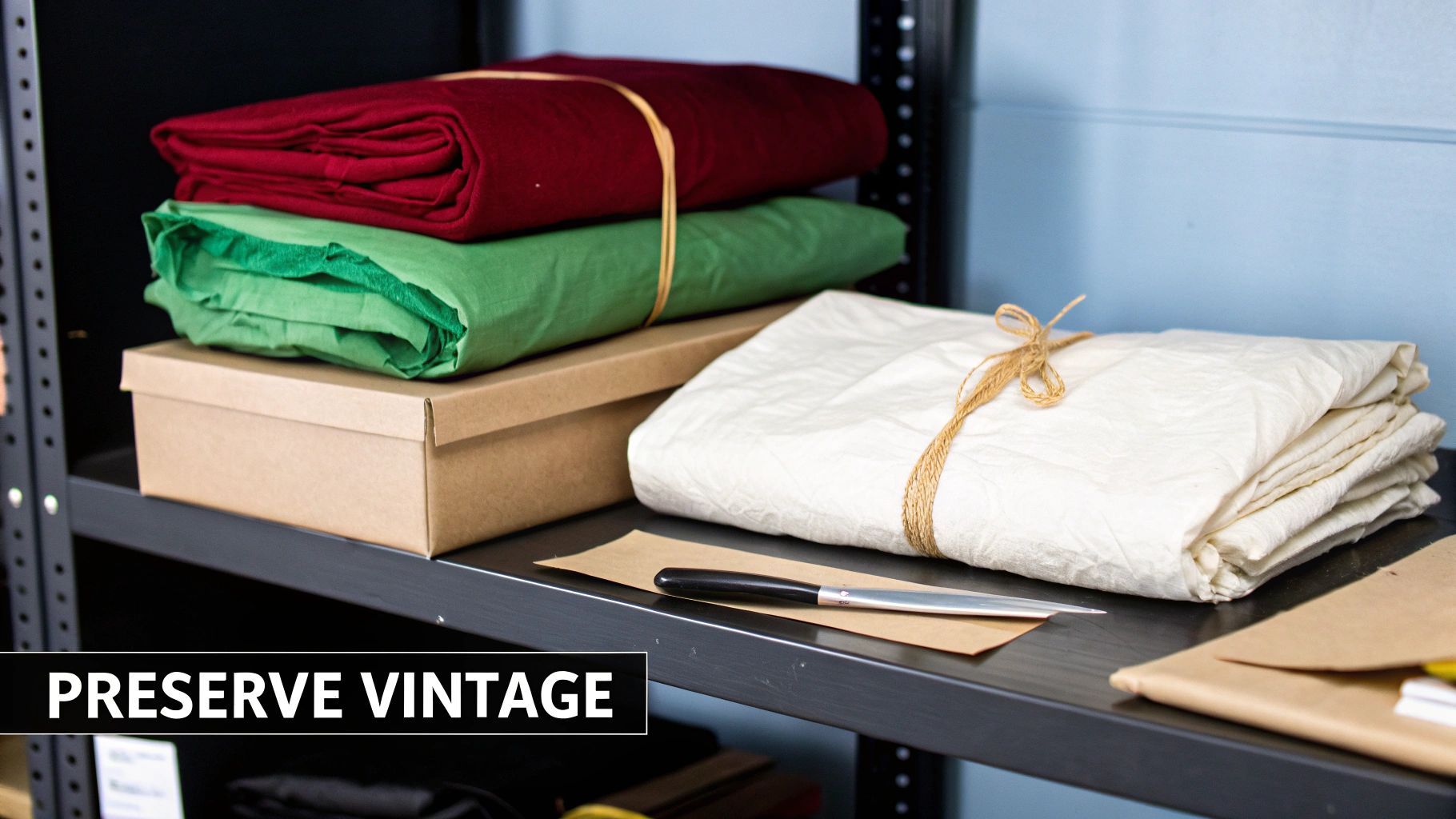
Delicate pieces or heavily beaded garments are better off folded. Lay them flat with acid-free tissue paper between the folds and keep them in a breathable cotton garment bag. The ideal spot is somewhere cool, dark, and dry, far away from direct sunlight that can bleach the colour right out of the fabric.
Think of your wardrobe not just as a closet, but as an archive. Proper storage protects your investment and preserves the integrity of each piece, ensuring it remains wearable and beautiful for years to come.
Simple fixes like a loose button or a tiny split in a seam can easily be handled at home. To keep things authentic, you can often find period-appropriate buttons at other vintage shops or online. For anything more serious, like a tear or a major alteration, it's time to call in a professional tailor. Find someone who specialises in vintage—they’ll have the skills to make repairs that are both strong and historically sensitive.
Finding Vintage for Every Body and Budget
Let's get one thing straight: the wonderful world of vintage is for everyone. It doesn't matter your shape, size, gender, or how much cash you have to spend. Vintage clothing stores aren't exclusive clubs; they're treasure troves where anyone can find something that feels like it was made just for them. It’s all about knowing where—and how—to look.
This isn't just a niche hobby anymore; the second-hand market is a global movement. Just look at Latvia, which in 2023 became a major hub, importing $33.9 million worth of used clothing and creating thousands of jobs. This boom shows a massive, diverse demand for pre-loved clothes, proving that vintage has a truly universal appeal. You can learn more about Latvia's role in the global clothing trade to see just how widespread this has become.
Thriving in Plus-Size Vintage
I'll be honest, finding plus-size vintage can sometimes feel like a tough mission, but it is absolutely possible. The key is knowing that "vanity sizing" is a modern invention, so older garments often run smaller than today's equivalents. But don't let that discourage you—certain eras were all about generous cuts and flowing silhouettes perfect for curvier figures.
- Focus on the Right Decades: The 1970s are your friend, with all those gorgeous, flowing maxi dresses and kaftans. The 1980s are another goldmine, thanks to its love for oversized blazers and looser fits that offer plenty of room and comfort.
- Prioritise Accessories: Never underestimate the power of accessories. A stunning vintage belt, a one-of-a-kind handbag, or a bold piece of jewellery can completely transform an outfit, and the best part is, they fit every body type perfectly.
- Look for Alteration Potential: Found a piece you love but it's a little too big? Don't pass it up! A good tailor can easily take in the seams, cinch a waistline, or shorten a hem to give you a perfect, custom fit.
Timeless Finds in Menswear
For men, the vintage world is a masterclass in quality and durability that you just don't see much of anymore. Instead of buying into fast-fashion trends that fall apart after a few wears, you can find classic pieces that were genuinely built to last a lifetime.
Think of vintage menswear as an investment in enduring style and superior craftsmanship. These are not just old clothes; they are foundational wardrobe staples that have already proven their worth over decades.
Keep an eye out for rugged leather jackets that only get better with age as they develop a rich patina. High-quality military surplus outerwear is another fantastic find, famous for its practical design and tough-as-nails construction. And don't forget well-made vintage denim—it often has a much sturdier weave and far more character than anything you'll find on the high street today.
Hunting for Gems on a Budget
You absolutely do not need a massive budget to build an amazing vintage wardrobe. While designer boutiques have their place, some of the most exciting discoveries are found in the most unexpected spots. For many of us, the thrill is all in the hunt.
Get ready to dig through flea markets, kilo sales (where you literally pay by weight), and your local charity shops. Sure, these places require a bit more patience and a sharp eye, but the reward is finding a truly unique piece for a fraction of what you'd pay elsewhere. By venturing beyond the perfectly curated racks of pricey vintage clothing stores, you open yourself up to a whole new world of affordable, stylish, and sustainable fashion. The message is clear: there's a piece of history out there waiting for every style, every body, and every budget.
A Few Common Questions About Vintage Shopping
Diving into the world of vintage is exciting, but it's natural to have a few questions. From figuring out the lingo to learning how to care for older pieces, getting some clear answers can make the whole experience that much better. Let's tackle some of the most frequent queries to help you shop like a seasoned pro.
What’s the Real Difference Between Vintage, Retro, and Thrifted?
You'll hear these words thrown around a lot, sometimes all in the same sentence, but they actually mean very different things. Getting a handle on them is your first step to navigating any second-hand shop with confidence.
- Vintage: This is the real deal. An item is officially considered vintage when it's between 20 and 100 years old. It's a genuine piece from a bygone era, carrying the style, materials, and craftsmanship of its time.
- Retro: This term is for brand-new items made to look old. Think of a modern dress cut in a classic 1960s A-line silhouette. It has the vintage vibe, but it was made last year, not last century.
- Thrifted: This simply means an item was bought second-hand. Anything in a charity shop is "thrifted," whether it's a true vintage coat, a retro-style top, or a fast-fashion t-shirt from two seasons ago.
So, while you can absolutely find vintage gems at a thrift store, not everything you thrift is vintage. The word "vintage" is all about age and history.
How Do I Get That Musty Smell Out of Vintage Clothes?
Ah, that classic "old clothes" scent. It’s incredibly common and, thankfully, usually quite easy to get rid of. It’s often just a sign that a garment has been tucked away in storage for a long, long time.
For most fabrics you can wash, a gentle hand wash with a mild detergent is your first move. The real secret weapon? Add a cup of white vinegar to the final rinse. It's a brilliant natural deodoriser that zaps odours without being harsh on the fibres.
If you’ve got something you can’t wash, like a heavy wool coat or a structured blazer, fresh air is your best friend. Hang it outside in a shady, breezy spot for a day or two. Another great trick is to seal the item in a large bag with an open box of baking soda for 24-48 hours—it works wonders to absorb those lingering smells. For anything truly precious or delicate, though, your safest bet is always a professional, eco-friendly dry cleaner.
Are Vintage Clothes Actually a Good Investment?
They absolutely can be, but "investment" means more than just money here. For most of us, the biggest return is in quality and sustainability. You're getting a unique, beautifully made piece of clothing with a story you just won't find on the high street. These garments were made to last, which makes them an incredibly smart choice against today's throwaway fashion culture.
From a purely financial angle, certain pieces can definitely grow in value. Iconic designer finds, especially from legendary houses like Chanel or Dior, can become major collector's items. The same goes for rare subculture pieces or garments that show off exceptional, one-of-a-kind craftsmanship.
While not every vintage blouse is going to become a priceless heirloom, its value in character, durability, and personal style is something you get to enjoy from day one.
Is It Better to Shop for Vintage Online or in Person?
This is the great debate! The truth is, both have their own magic, and the best option really depends on what you're looking for and how you like to shop.
Heading into a physical vintage store is a wonderfully tactile experience. You can feel the weight of a fabric, check the seams up close, and—most importantly—try things on. That immediate feedback takes all the guesswork out of sizing and condition, so you know exactly what you're buying.
On the flip side, shopping online gives you access to a massive, global closet. It’s perfect when you're hunting for something very specific, like a 1940s tea dress or a particular brand of 70s denim jeans. The key to success online is to know your measurements by heart, read every detail in the description, check the return policy, and never be shy about asking the seller for more photos or information.
Honestly, a mix of both usually works best. Browse your local shops for inspiration and unexpected treasures, and turn to the internet for those targeted, must-have searches.
Ready to mix your unique vintage finds with the perfect modern staples? The curated collections at PANTERA STORES offer versatile basics, on-trend accessories, and stylish footwear to complete any look. Explore our new arrivals and discover pieces that make your vintage treasures truly shine. Shop the collection at PANTERA STORES today!