

Your Essential Guide to the Canada Goose Jacke

A Canada Goose jacket is much more than just a winter coat. It’s a serious piece of high-performance gear, born from a legacy of arctic exploration. That iconic status comes from an unwavering commitment to warmth, durability, and pure function, which is why it’s trusted by scientists at McMurdo Station just as much as by people navigating a frigid city commute.
What Makes a Canada Goose Jacket an Icon
Ever wonder what’s really behind that famous red, white, and blue patch? The story of a Canada Goose jacket doesn't start in a fashion studio; it begins in the unforgiving Canadian North. It's a tool engineered for survival, where every single stitch and piece of fabric serves a critical purpose.
Think of it less like an everyday car and more like a Land Rover kitted out for a polar expedition. Every component is hand-picked for peak performance in the most brutal conditions you can imagine. This dedication to function over fashion is what cements its legendary status. The brand's entire identity is built on authenticity and a simple promise: to protect you from the extreme cold.
The Core Components of Quality
At the heart of every genuine Canada Goose jacket are two things: the insulation and the outer shell. These aren't just generic, off-the-shelf materials. They are highly specialised components chosen for their ability to perform under pressure.
- Responsibly Sourced Down: The engine of the jacket is its premium down insulation. Often sourced from mature Hutterite geese, this down has a higher fill power, which is just a technical way of saying it traps more air. This gives you incredible warmth without the bulk, a key factor for staying comfortable and mobile.
- Arctic Tech Fabric: That signature tough-feeling outer material is called Arctic Tech. It's a heavy-duty blend of polyester and cotton treated with a Durable Water Repellent (DWR) finish. This textile is built to block harsh winds, shrug off snow, and stand up to scuffs and scrapes, making it ridiculously durable for years of wear.
The real magic is how the high-loft down and the weather-resistant shell work together. They create a protective microclimate inside the jacket that shields you from freezing temperatures and biting winds. This synergy is the secret sauce behind its famous warmth.
Legendary Styles and Their Purpose
Beyond the raw materials, the design of each model is entirely purpose-driven. Two styles really tell this story and have become legends in their own right. The Expedition Parka, for instance, was first created for scientists working in Antarctica. It features a deep tunnel hood to protect exposed skin from frostbite and is covered in massive pockets for stashing gear.
Then you have the Chilliwack Bomber, designed for bush pilots in Northern Canada. Its shorter, waist-length cut allows for freedom of movement when climbing in and out of tight cockpits, but it still packs the same reliable warmth as its bigger siblings. When you understand these origins, you realise a Canada Goose jacket isn't just outerwear—it’s a piece of functional history.
How to Choose the Right Canada Goose Model
Picking the perfect Canada Goose jacket isn't about just grabbing the one that looks best; it’s about matching the jacket's design to your real-world needs. Think of it like buying tyres for your car—you wouldn't put racing slicks on for a snowy mountain pass. The same logic applies here. This guide will walk you through the key considerations to find a jacket that feels like it was made just for you.
The most important tool Canada Goose gives you is its Thermal Experience Index (TEI). This is a simple 1-to-5 rating that cuts through all the technical jargon and tells you one thing: how warm the jacket is. It’s designed to help you pinpoint the exact level of insulation you need, so you’re never caught shivering or, just as bad, sweating on your commute.
Decoding the Thermal Experience Index (TEI)
Getting to grips with the TEI scale is your first and most important step. Each number on the scale corresponds to a specific temperature range, making it incredibly easy to match a jacket to your local climate and how you plan to use it.
Below is a simple breakdown of the TEI ratings to help you choose the right level of warmth.
| Canada Goose Thermal Experience Index (TEI) Explained | ||
|---|---|---|
| TEI Rating | Temperature Range (°C) | Best For |
| TEI 1 | 5°C to -5°C | Lightweight warmth for active days or unpredictable spring/autumn weather. |
| TEI 2 | 0°C to -15°C | Versatile core warmth, perfect for daily wear and city commutes. |
| TEI 3 | -10°C to -20°C | Fundamental, everyday warmth for most winter conditions. The classic choice. |
| TEI 4 | -15°C to -25°C | Enduring warmth for seriously cold climates where the chill is relentless. |
| TEI 5 | -30°C and below | Extreme insulation, built for the coldest places on Earth and polar exploration. |
Essentially, as the TEI number goes up, so does the insulation. A TEI 1 is your go-to for a brisk autumn day, while a TEI 5 is what you’d want for an Arctic expedition. For most people living through a standard cold winter, a TEI 3 is often the sweet spot.
Remember, the goal isn't to buy the absolute warmest jacket available. It's about being honest about your climate and activity level. An overly warm jacket can be just as uncomfortable as one that isn't warm enough.
This decision tree gives you a great visual guide for thinking through your choice, breaking it down by warmth, durability, and intended function.
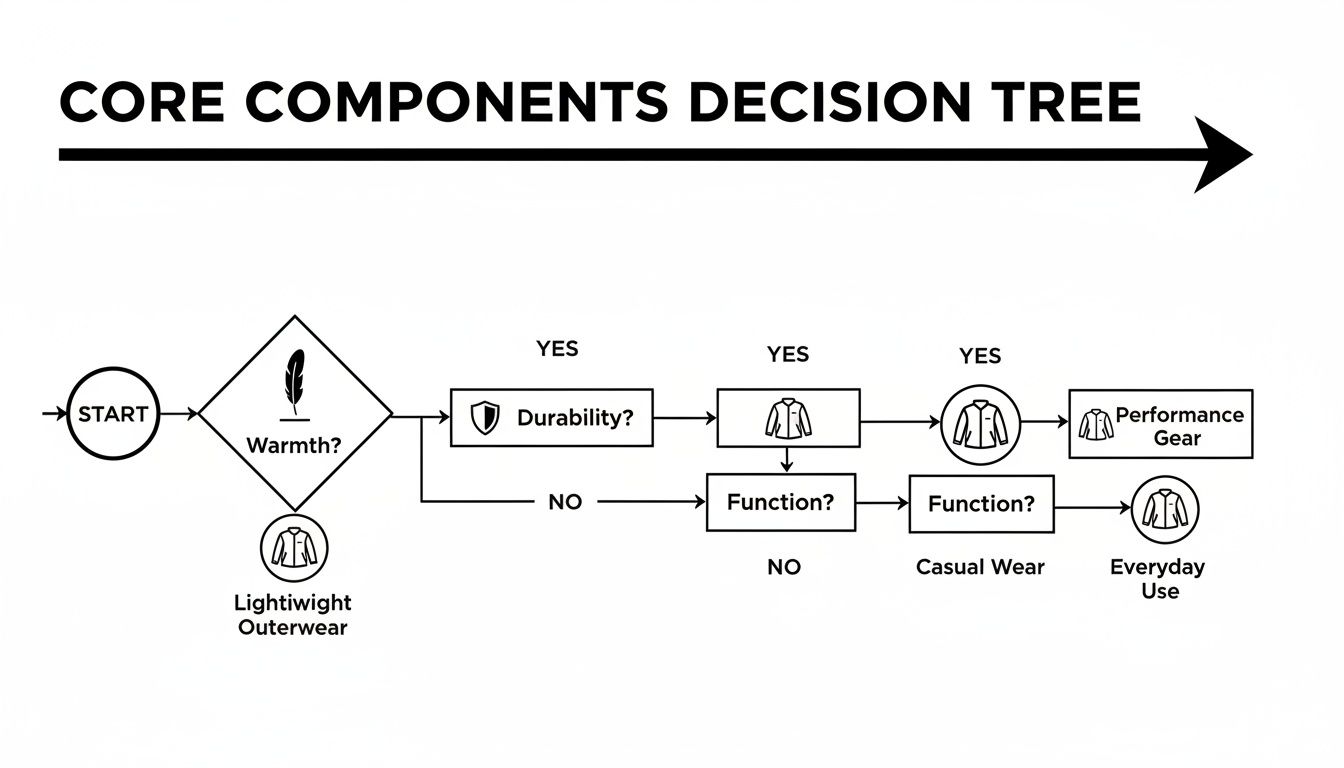
Ultimately, what the chart shows is that your main priority—whether that’s deep-freeze insulation or rugged durability for outdoor work—should be the starting point for narrowing down the models.
Matching Fit and Length to Your Lifestyle
After you’ve figured out your ideal TEI rating, the next piece of the puzzle is the jacket’s fit and length. These details have a massive impact on comfort and practicality. Canada Goose generally offers three main fits:
- Slim Fit: Cut to sit close to the body. This is a great choice if you prefer a sleek, athletic look or want to layer it under a waterproof shell.
- Regular Fit: The perfect middle ground. It’s neither too tight nor too baggy, leaving just enough room for a sweater underneath without feeling bulky.
- Relaxed Fit: The most generous cut in their lineup. It’s designed for maximum movement and is ideal for layering over thick mid-layers.
The jacket’s length is just as important. Shorter bomber-style jackets give you fantastic freedom of movement, which is great if you’re active. On the other hand, longer thigh-length and full-length parkas offer far more protection from biting winds and driving snow.
This demand for highly specialised, functional outerwear is a big reason why North America is such a powerhouse in the global down jacket market. In fact, Canada's market alone was valued at USD 8,699.59 million in 2025 and is set to keep growing. You can dive deeper into the numbers by exploring the full analysis of down jacket market trends on cognitivemarketresearch.com.
By taking a moment to consider the TEI, fit, and length together, you’ll be able to confidently choose a Canada Goose jacket that’s a perfect match for your winter ahead.
How to Spot a Fake Canada Goose Jacket
Let's be honest, with the kind of money a Canada Goose jacket costs, there's a huge market for fakes trying to cash in on the name. These knock-offs might look the part from a distance, but they deliver none of the warmth, quality, or durability you're actually paying for. Getting good at spotting the difference is key to making sure your investment is the real deal.
Think of it as a checklist. We'll go through the crucial details, one by one, to separate the genuine article from the cheap imitations.
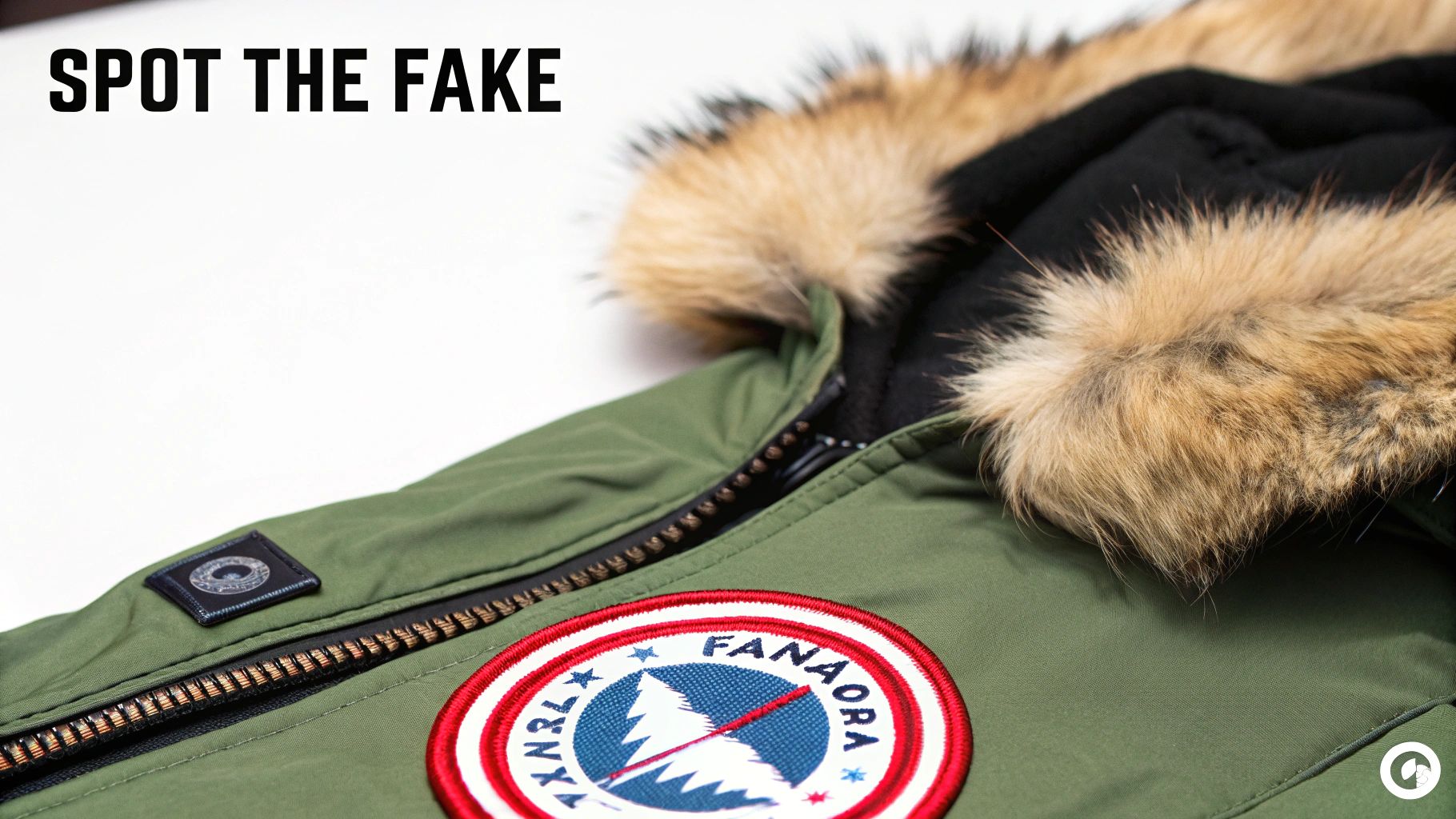
Spotting a fake is all about the little things—the details counterfeiters almost always get wrong. A real jacket is built with incredible precision, and that's something you just can't fake on the cheap. From the famous patch to the feel of the zip, every single part tells a story.
Examine the Arctic Disc Patch
The most recognisable detail is also the biggest giveaway: the Arctic Disc patch. This is usually the first place a fake falls flat. On a genuine jacket, the embroidery is flawless.
- Maple Leaves: Look closely at the maple leaves. They should be sharp and cleanly defined. Fakes often have fuzzy, misshapen leaves that look more like red blobs, sometimes with sloppy threads connecting them.
- Lettering: The text, like "CANADA GOOSE" and "ARCTIC PROGRAM," should be crisp and evenly spaced. If the font looks messy, the letters are touching, or the thickness is all over the place, that's a massive red flag.
- Colour and Detail: The red, white, and blue on an authentic patch are rich and vibrant. Fakes tend to use duller colours and often butcher the fine detail in the map outline.
Think of the patch as the jacket's signature. A real signature is clean and confident; a forgery is often shaky and rushed. If that patch looks even slightly "off," trust your gut.
Inspect the Fur and Hardware
Beyond the patch, the actual materials tell you everything you need to know. Canada Goose is famous for using top-tier components, and counterfeiters simply can't afford to match that quality. A great place to start is the fur ruff you see on many of their parkas.
An authentic fur ruff (typically coyote fur) is thick, soft, and feels luxurious. It has a natural, wild look with variations in colour and length. Fake fur, on the other hand, often looks matted and scraggly right from the start. It feels coarse to the touch and just looks thin and cheap.
Next, get a feel for the hardware. A real Canada Goose jacket will almost always feature heavy-duty YKK zips, which are the gold standard for durability. The zip pull itself should feel heavy and solid in your hand. Fakes use flimsy, unbranded zips that snag easily or feel like cheap plastic.
Look for the Hologram and Authorised Retailers
To fight back against fakes, Canada Goose started adding a hologram tag to its jackets back in 2011. It's a small tag stitched inside, usually with the other care labels, and features a polar bear that's tough to replicate. If a modern jacket doesn't have this hologram, it’s an immediate warning sign.
But really, the single best way to know you're buying a genuine Canada Goose jacket is to get it from an authorised retailer. If a deal on some random website or marketplace seems way too good to be true, it is. The brand keeps an official list of its stockists on its website. Buying from one of them is the only way to completely remove any doubt.
Caring for Your Investment
Think of your Canada Goose jacket as more than just a coat; it's a piece of high-performance gear built to protect you from serious cold for years to come. But like any specialised equipment, from a good car to a quality watch, its performance and lifespan depend heavily on how you look after it.
Ignoring proper care is the fastest way to weaken the very features that make the jacket so effective. The technical materials and natural down insulation need a specific kind of attention. Thankfully, a little know-how is all it takes to keep your jacket in top form, ready for whatever winter throws at you.

Why Professional Cleaning Is a Must
Whatever you do, resist the urge to throw your jacket in your home washing machine. It might seem like the easy option, but standard detergents and the aggressive agitation of a typical wash cycle can do irreversible damage.
- Ruined Down Insulation: Household soaps are harsh. They strip the natural, protective oils from the down feathers, making them brittle and causing them to clump. Once that happens, they can no longer effectively trap air, and the jacket loses a significant amount of its insulating power for good.
- Compromised Weatherproofing: The outer shell, especially fabrics like Arctic Tech, is treated with a Durable Water Repellent (DWR) finish. Aggressive washing strips this vital coating away, leaving the fabric exposed to wind and moisture. You can dig deeper into how these finishes work by checking out a comparison of fabrics for different weather conditions.
This is exactly why Canada Goose themselves insist on professional cleaning. A specialist who works with down outerwear will use the right gentle solvents and techniques to clean your jacket without destroying its internal structure or outer shell.
Smart Off-Season Storage
What you do with your jacket during the spring and summer is just as critical as how it's cleaned. Shoving it into a cramped space or sealing it in a bag can crush the down and misshape the jacket, leaving you with a flat, less-than-warm coat when the first frost hits.
To keep its loft and shape intact, just follow these simple steps for storage:
- Clean Before You Store: Make a habit of getting the jacket professionally cleaned at the end of winter. Body oils, dirt, and grime can degrade the fabric and attract pests if left to sit for months.
- Hang, Don't Fold: Use a wide, sturdy hanger that can support the jacket's weight and preserve the shape of its shoulders. A flimsy wire hanger is a definite no-go.
- Let It Breathe: Store it in a cool, dry wardrobe with plenty of space around it. Never compress it into a vacuum bag or a packed suitcase—this will permanently flatten the down clusters.
- Cover It Up: A breathable garment bag is your best friend here. It protects the jacket from dust while still allowing air to circulate, which is key to preventing any musty smells or mildew.
Understanding the Price and Long-Term Value
Let's talk about the elephant in the room: the price. When you see the tag on a Canada Goose jacket, it's natural to wonder, "What am I actually paying for here?" It’s not just a logo or a fashion statement. The cost is a direct reflection of a deliberate choice to prioritise domestic manufacturing, top-tier materials, and a product built to last a lifetime.Unlike so many brands that chase lower costs by outsourcing production, Canada Goose has kept its core manufacturing right here in Canada. This isn't just a marketing point; it's a commitment that supports skilled local workers and allows for obsessive quality control over every single jacket. Sure, it means higher labour costs, but the result is a level of craftsmanship you can see and feel. That's the first piece of the value puzzle.
What Goes Into the Price Tag
The second piece is the raw materials. Canada Goose is famous for using premium, ethically sourced Hutterite down, which is one of the best insulators on the planet. It delivers incredible warmth without the bulk, but this high-grade down is an expensive component, and that's reflected in the final price.
So, what are the key ingredients that make up the cost?
- Canadian Craftsmanship: Every jacket is assembled by skilled hands in Canada, which guarantees excellent quality and supports fair labour.
- Premium Materials: From the Hutterite down to the durable, weather-resistant outer fabrics, only high-performance components are used.
- Lifetime Warranty: The company backs its jackets with a warranty covering defects in materials and workmanship for the life of the product.
This approach is much closer to building long-term gear than creating disposable fashion. To get a better sense of this philosophy, our guide that explains the differences between fast fashion and slow fashion really breaks down why well-made items have a higher upfront cost.
Thinking of a Canada Goose jacket as a long-term investment is the right way to look at it. With its lifetime warranty, it stops being just another coat and becomes a reliable piece of equipment you can count on for years, maybe even decades.
A Luxury Brand with Lasting Power
There's no denying its luxury status, but that reputation is built on proven performance. In the 2024 financial year, Canada Goose pulled in around 1.33 billion Canadian dollars in global revenue. A huge part of that success comes from selling directly to customers, a channel that grew from about 431 million in 2019 to nearly 807 million Canadian dollars by 2023. These numbers, which you can see in more detail in Statista's report on the revenue of Canada Goose, show a brand with a powerful market presence, all built on a reputation for quality.
In the end, buying a Canada Goose jacket isn't just about staying warm this winter. You’re investing in years of Canadian-made durability, materials that perform in the harshest conditions, and the peace of mind that comes with a product built to endure.
Comparing Top Outerwear Alternatives
While a Canada Goose jacket is a serious contender for the coldest days on the planet, it’s far from the only game in town. The world of high-end outerwear is packed with fantastic brands, each with its own philosophy, and one of them might just be a better fit for your lifestyle, ethics, or personal style.
Think of it like choosing a vehicle. Canada Goose is the undisputed Land Rover of the jacket world—rugged, dependable, and built for the absolute harshest conditions. But that doesn't mean you wouldn't also consider a sleek sports car or an innovative electric vehicle. Other brands excel in their own lanes, and it's worth exploring the options.
Performance and Technical Focus
If you’re the type who lives for alpine sports or needs gear that can keep up with intense outdoor pursuits, Arc'teryx should be on your radar. This brand is almost legendary for its meticulous construction, clean aesthetics, and its pioneering use of advanced materials like GORE-TEX. Their jackets are incredibly lightweight and designed for maximum mobility, which is why you’ll see them everywhere from ski slopes to mountain peaks.
Another giant in the performance space is The North Face. They've mastered the art of blending technical, trail-ready features with styles that look just as good on city streets. To see how their gear compares, check out our in-depth guide to The North Face jackets.
Luxury and Style
For those who want their outerwear to make a serious fashion statement, Moncler is the name to know. Though its roots are in outfitting mountaineering expeditions, today the brand is synonymous with high-fashion silhouettes and its signature glossy nylon. A Moncler jacket delivers fantastic warmth, but it's also a clear style choice.
Canada Goose projects a tough, functional vibe, whereas Moncler embodies European luxury. It really boils down to whether your personal style leans more towards understated utility or a bold, fashion-forward look.
The market is always changing, and even the biggest players have to adapt. Canada Goose, for instance, is now branching out from its winter-only reputation into lighter spring and summer wear. This strategy, aimed at capturing a broader audience and catering to milder climates, is a fascinating industry shift. You can discover more insights on Canada Goose's market strategy on citynews.ca. This evolution just goes to show how much room there is for different brands to carve out their niche.
Got Questions? We've Got Answers
It's natural to have a few last-minute questions before committing to a premium jacket. Let's tackle some of the most common ones that come up when people are considering a Canada Goose.
Are Canada Goose Jackets Really Worth The Money?
This is the big one, isn't it? The honest answer is: it depends on your needs. Their value really shines through in their incredible construction for brutally cold weather, the quality of the Canadian materials, and that lifetime warranty.
If you live somewhere with harsh, unforgiving winters and need a parka that will last for years, many people would say the investment absolutely pays off. But if your winters are on the milder side, you might find a different brand offers a more practical balance of warmth and price.
How Do I Choose The Right Size?
Sizing can be tricky because it changes so much from one style to another. You'll find jackets in slim, regular, and relaxed fits. The best first step is to check the official Canada Goose sizing chart for the exact model you're looking at.
Honestly, though, nothing beats trying one on in person at an authorised shop. When you do, make sure to wear the kind of sweater or mid-layer you'd normally have on underneath.
A classic mistake is buying a size that’s too tight. You need enough room not just for comfortable movement, but also for air to circulate. That trapped air is a huge part of what keeps you warm.
Can I Just Wash My Canada Goose Jacket At Home?
Please don't! The brand strongly advises against it, and for good reason. A standard washing machine and laundry detergent can wreck the delicate down filling and strip the fabric of its water-resistant coating.
To keep your jacket performing at its best for years to come, take it to a professional dry cleaner that knows how to handle down products. It's the only way to do it right.
Ready to explore premium outerwear that balances style, quality, and value? Discover the latest collections at PANTERA STORES and find your perfect look for any season. Shop now at panterastores.com