

A Modern Man's Guide to Men Clothing Stores

Finding the right men's clothing store can feel like a mission, but it’s the only way to build a wardrobe that actually makes you feel good. The secret isn't just knowing what to buy, but where to buy it. Different shops serve different needs, whether you're after a quick trend fix or a timeless piece that'll last you for years.
This guide will help you sort through it all with confidence.
Your Guide to Modern Menswear Shopping
Let's be honest: wading into the world of menswear can be a bit much. You've got endless online stores, massive high-street brands, and cool little boutiques all shouting for your attention. It's no wonder so many guys just stick to what they know or throw in the towel completely. But getting smarter about shopping is a skill, and it's one you can definitely learn.
This guide is here to cut through that noise. We'll start by mapping out the different kinds of men's clothing stores you'll encounter. Think of it this way: you wouldn't go to a greasy spoon expecting a Michelin-star meal. The same logic applies here; you can't expect the same thing from every retailer.
Knowing the lay of the land is the first rule of smart shopping. It lets you buy with a purpose, whether you're grabbing a cheap t-shirt for a festival or investing in a coat you'll still be wearing a decade from now.
Understanding these differences is especially crucial in places where people really care about what they wear. Take Luxembourg, for example. The men's apparel market there is one of the most valuable in Europe per person. By 2025, the average person is expected to spend around US$530.26 on menswear, which tells you people there are looking for quality and style. You can see the full breakdown on the Luxembourgish men's apparel market on Statista.
Here’s what this guide will give you a clear roadmap for:
- Spotting the difference: Learn to tell fast fashion from specialty streetwear or a premium brand at a glance.
- Shopping with a plan: Know exactly where to go for what you need, which saves a ton of time and money.
- Building a wardrobe that works: Start making choices that actually fit your life and your personal style.
By the time you're done, you'll have the confidence to walk into any men's clothing store—online or on the high street—and build a wardrobe that truly works for you.
Decoding the Four Types of Menswear Retailers
Not all men's clothing stores are built the same. Knowing where to shop is just as critical as knowing what to buy, and a little strategy goes a long way. Think of it like going out to eat: sometimes you're in the mood for a quick, cheap, and trendy bite from a food truck, while other times you want a meticulously prepared meal that you'll remember for years. Each serves a purpose, and the same thinking applies to building a wardrobe that works for you.
When you understand the four main types of menswear shops, you can walk in (or log on) with a clear mission. You'll know whether you're hunting for a fleeting trend or investing in something that'll still look sharp a decade from now.
Fast Fashion Trend Chasers
Fast fashion brands are the sprinters of the clothing world. Their entire game is built around speed—they can take a look from the runway and have it on their racks in a matter of weeks. This means you get access to the very latest styles for ridiculously low prices. They're perfect for experimenting with a bold trend you're not quite sure about yet.
The catch? Quality often takes a backseat. To hit those low price points, the materials and construction are usually less durable, so don't expect these pieces to become long-term favourites. They're fun for a season, but they aren't the building blocks of a lasting wardrobe.
Specialty and Streetwear Boutiques
Once you step away from the big-box stores, you enter the world of specialty boutiques. These shops are all about a specific niche, with streetwear being one of the most popular. Think of them as carefully curated hubs for particular subcultures, stocking exclusive drops, limited-edition collaborations, and brands that carry serious cultural weight. Shopping here is less about chasing mass-market trends and more about expressing a distinct personal style.
These retailers are the real tastemakers. They don't just sell clothes; they build communities around a shared aesthetic, offering pieces that often feel more like collector's items than just another shirt or hoodie. It's a world driven by brand loyalty and cultural cool.
Another exciting corner of this world is vintage clothing, which gives you a sustainable way to find one-of-a-kind, well-made pieces with a story. If that piques your interest, you should check out our guide to the best vintage clothing stores to see how you can mix timeless finds into a modern wardrobe.
This diagram helps illustrate how different men's clothing stores, from the fast-fashion giants to curated boutiques, occupy different spaces in the retail world.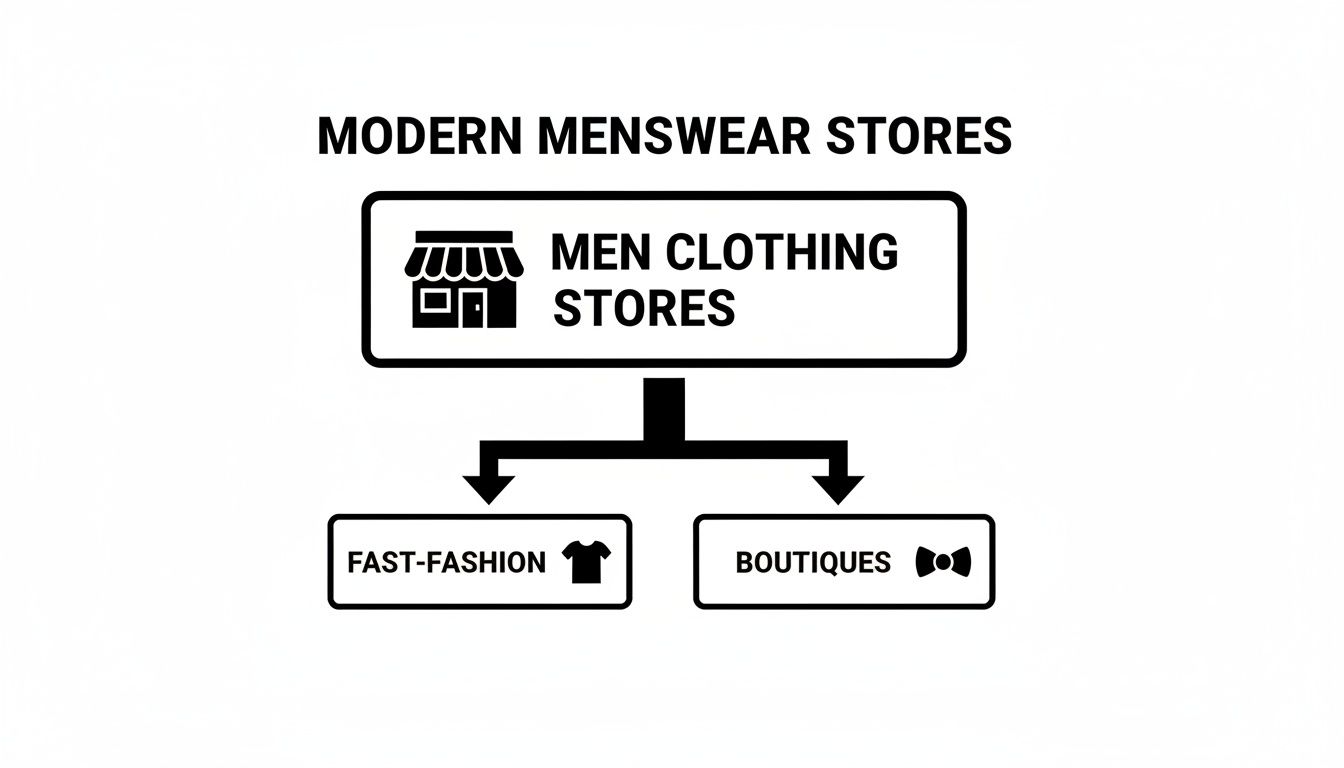
The image neatly contrasts the mass-market approach of fast fashion with the focused, niche appeal of boutiques, showing two very different paths a shopper can take.
To make it even clearer, here's a quick breakdown of how these categories stack up against each other.
Comparing Men's Clothing Store Categories
| Store Type | Primary Focus | Price Point | Best For |
|---|---|---|---|
| Fast Fashion | Trendy, high-volume apparel | Low ($) | Experimenting with of-the-moment styles without a big financial commitment. |
| Streetwear/Boutique | Niche styles, exclusive drops, brand identity | Mid to High ($$-$$$) | Expressing a unique personal style and finding culturally relevant pieces. |
| Wardrobe Basics | Timeless essentials, quality materials | Mid-Range ($$) | Building the foundation of your wardrobe with durable, versatile staples. |
| Premium/Luxury | Designer names, exceptional craftsmanship | High to Very High ($$$$) | Investing in long-lasting statement pieces with impeccable quality. |
This table should give you a good mental map for navigating your next shopping trip, whether you're online or on the high street.
Wardrobe Basics Providers
This category is your go-to for the unsung heroes of your closet. These shops focus on perfecting the essentials—the ultimate white t-shirt, a pair of chinos that fit just right, or that classic grey sweatshirt you'll live in all weekend. They aren't chasing trends; they're obsessed with getting the fundamentals right through better materials, a perfect fit, and construction that lasts.
When you shop here, you're building the reliable foundation that makes getting dressed every morning easier. These simple-looking items are the backbone of countless outfits, and their real value comes from their versatility and longevity.
Premium and Luxury Retailers
At the very top of the ladder, you have premium and luxury brands. This is where the focus shifts to exceptional craftsmanship, the absolute finest materials, and iconic designer names. We're talking about true investment pieces: a perfectly tailored suit, a buttery-soft leather jacket made by hand, or a watch that you'll one day pass down.
The price tag is obviously much higher, but what you’re paying for is world-class quality, an obsessive attention to detail, and timeless designs that will never go out of style. This is the fine-dining equivalent of menswear, where every single element has been thought through to perfection.
Your Essential Checklist for Smart Shopping
Knowing where to shop is one thing, but knowing what to buy when you get there is the real game-changer. A smart purchase isn't just about the price tag. It comes down to a few core elements that decide whether that new shirt becomes a wardrobe staple or a donation pile regret.
Think of this as your simple, no-nonsense checklist. It turns shopping from a guessing game into a methodical process. By focusing on fit, materials, and the store’s policies, you can build a wardrobe filled with pieces you'll actually reach for again and again.
Nail the Fit Every Time
Let’s be clear: fit is everything. It's the single most important factor in looking put-together. A perfectly fitting t-shirt will always beat an ill-fitting designer suit, no contest. When your clothes fit properly, they work with your body's shape, not against it. Clothes that are too big just make you look shorter and heavier than you actually are.
To get it right, you need to know the basic language of fit:
- Slim Fit: This cut sits closer to the body. It’s tapered to create a sharp, modern silhouette and works best for leaner frames.
- Regular Fit: The classic choice. It gives you a bit more room through the chest and waist without looking baggy. Comfortable and timeless.
- Relaxed Fit: The most generous cut of the three. It’s all about maximum comfort and a casual, laid-back vibe.
The goal isn't to cram yourself into the tightest size you can manage. It’s about finding the cut that flatters your build and matches the style you’re going for.
Understand Your Materials
The fabric of a garment controls its comfort, how long it lasts, and how it looks and feels. Broadly speaking, materials fall into two camps: natural fibres and synthetics. Each has its own strengths and is built for different jobs.
Natural fibres like cotton are breathable and soft—perfect for everyday essentials like t-shirts and casual shirts. Wool is a champion for warmth and structure, which is why it’s a go-to for knitwear and suiting. Then you have synthetics like polyester and nylon, which bring durability, wrinkle resistance, and moisture-wicking to the table. This is exactly why they’re all over activewear. Often, a blend gives you the best of both worlds.
Choosing the right material is like choosing the right tool for a job. Cotton is your reliable, all-purpose screwdriver, while a technical synthetic fabric is a specialised power tool designed for performance.
Check the Policies Before You Pay
A store's policies tell you a lot about their confidence in what they sell and how much they value you as a customer. Before you hit "buy," especially online, take thirty seconds to check two things.
First, the return policy. A straightforward, fair return policy is a great sign. It means the brand stands by its quality and gets that sometimes, things just don't work out. It gives you the freedom to try things on at home, risk-free.
Second, have a quick look at the payment and shipping options. Good men clothing stores offer secure, familiar payment methods and are upfront about shipping costs and delivery times. These practical details are what make for a smooth, trustworthy shopping experience from start to finish.
Building a Versatile Wardrobe That Actually Works
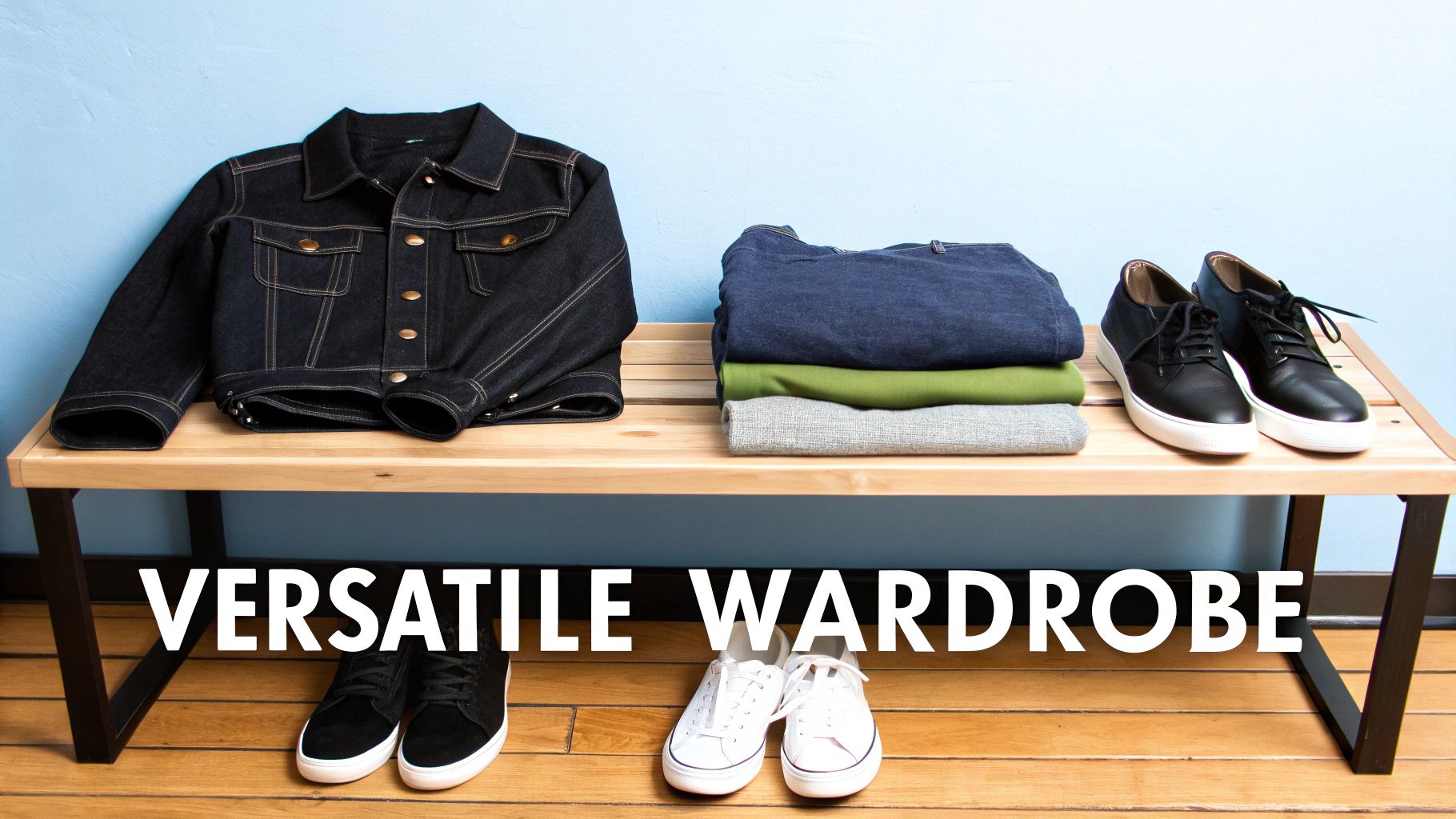
The smartest way to shop at men clothing stores isn't about chasing one-off trends or buying individual items that catch your eye. It's about building a system—a cohesive collection where every piece can work with several others. This is the secret to a wardrobe that punches well above its weight.
Think of it like stocking a kitchen. You don't just buy random, exotic ingredients. You start with the fundamentals: good olive oil, salt, garlic, onions. In your closet, these staples are well-made essentials like a few great t-shirts, versatile trousers, and a reliable jacket you can throw over anything.
When you take this approach, you save time, money, and that all-too-familiar feeling of staring into a full closet and thinking, "I have nothing to wear." It’s about making every single purchase count.
Master the Art of a Capsule Wardrobe
The term "capsule wardrobe" might sound a bit technical, but the idea is brilliantly simple. It’s a curated collection of essential, timeless items that you can then accent with a few seasonal pieces. The entire philosophy is built on quality over quantity and choosing clothes that mix and match effortlessly.
The real power of a well-built wardrobe isn't in having more clothes; it's in having more options. When your foundational pieces work together, you create dozens of outfits from a handful of items.
Putting one together is a straightforward process that will completely transform the way you shop. For a complete walkthrough, check out our step-by-step guide to building a capsule wardrobe for practical tips you can use right away.
The trick is to start with a neutral colour palette. Think navy, grey, white, and black. This guarantees that almost everything you own will look good together.
Practical Styling Strategies for Maximum Versatility
Once you’ve got your core pieces sorted, getting dressed stops being a chore and starts becoming a creative exercise. The real magic is in how you combine these essentials to fit different situations. Let's take one hero item and see how far we can stretch it.
Example: The Dark Denim Jean
A single pair of well-fitting dark denim jeans is probably the most versatile piece of clothing you can own. Here’s how you can style it for three completely different scenarios:
-
Casual Weekend: Pair the jeans with a clean white t-shirt, a casual bomber jacket, and classic white trainers. It's a timeless, comfortable look that's just effortlessly cool.
-
Smart-Casual Office: Take those same jeans and wear them with a button-down Oxford shirt and a pair of smart leather loafers or derby shoes. Tucking in the shirt and adding a simple leather belt instantly sharpens up the entire outfit.
-
Evening Out: Now, swap the shirt for a fine-knit merino wool jumper in a darker colour like charcoal or navy. Finish the look with some sleek Chelsea boots, and you’re ready for dinner or drinks.
This one simple example proves the point: a smaller, smarter wardrobe is far more powerful than a closet overflowing with disconnected, trendy items.
How to Find True Value and Master the Sales
Navigating the world of men clothing stores can feel like you're just hunting for the lowest price. But let's be honest, a cheap t-shirt that falls apart after three washes isn't a bargain. It's just a waste of money. The real secret to smart shopping isn't about grabbing the biggest discount; it’s about understanding what true, long-term value looks like.
To do that, you need to shift your focus from the initial price tag to a much more powerful metric: cost-per-wear. It's a simple idea, but it completely changes how you evaluate a potential purchase.
The Power of Cost-Per-Wear
Think about it this way. You could buy a €15 jumper from a fast-fashion brand and maybe get five wears out of it before it shrinks or loses its shape. Your cost-per-wear is €3.
Now, imagine you invest in a well-made, €100 merino wool jumper instead. You'll likely wear it at least 50 times over the next few years. Suddenly, its cost-per-wear drops to just €2.
The better-quality item isn't just a more sustainable choice; it's actually the cheaper option in the long run. Focusing on durability and timeless style saves you money and helps build a wardrobe that lasts.
This value-first approach is catching on. Sustainability is becoming a major force in men clothing stores across Luxembourg (LU), especially as consumer awareness and EU directives push the industry forward. Projections show the share of sales from sustainable apparel climbing from 3.7% in 2022 to 5.3% by 2026—a significant shift in a region that values eco-conscious choices. You can dive deeper into these apparel industry trends at IBISWorld. If you're keen to explore brands leading the charge, check out our guide on the best sustainable clothing brands for your wardrobe.
How to Shop Sales Like a Pro
Seasonal sales can be a goldmine for scoring high-quality pieces at a better price, but they're also littered with traps. Most of what's on the discount rack are last season’s trendy leftovers that will look dated in a few months. To really master the sales, you need a game plan.
Stick to these simple rules, and you'll walk away with a genuine bargain, not just someone else’s mistake:
- Shop with a list. Don't just wander into a sale to "see what's there." Know what your wardrobe is actually missing—maybe it's a classic navy blazer or a solid pair of leather boots—and stay focused on your mission.
- Focus on timeless essentials. Sales are the perfect opportunity to invest in those foundational pieces. Look for quality outerwear, classic knitwear, or well-made denim from brands you trust. These are the workhorses of your wardrobe that will serve you for years.
- Ignore the original price. It's easy to get mesmerised by a huge discount percentage. Instead, ask yourself a simple question: "Would I still want this if it wasn't on sale?" If the answer is no, step away. It's not a smart buy, no matter how low the price.
By pairing the cost-per-wear mindset with a strategic approach to sales, you can build a high-quality wardrobe without breaking the bank. It's about making sure every piece you buy adds real, lasting value.
Putting It All Together with PANTERA STORES
All this theory is great, but the real test is putting it into practice. This is where you start building genuine confidence in your choices. So, let’s walk through a real-world scenario using PANTERA STORES, a modern online shop that really nails the balance between style and everyday practicality. This is where your shopping checklist and wardrobe-building know-how truly come alive.
Let's say your goal is to build that versatile, go-anywhere wardrobe we’ve been talking about. Your first move should always be to lock down a solid foundation of essentials. Don’t get sidetracked by flashy, one-off pieces just yet. Head straight for a core collection.
Finding Your Foundation Pieces
At PANTERA STORES, this means diving into their basics and sets. These collections are literally designed to be the dependable workhorses of your closet. You’ll find high-quality tees in neutral colours, ridiculously comfortable hoodies, and joggers that look just as good on the street as they do on your sofa. This targeted approach saves you a ton of time and guarantees every piece you buy works together.
Once you're there, pull out that mental shopping checklist to size up each item. Read the product descriptions to see what they're made of—you’ll notice they use smart blends designed for both comfort and durability. This is you, in real-time, putting your knowledge of materials to good use.
A well-organised online store is like a good personal stylist. By curating collections like 'Basics' or 'Men’s Sets', shops like PANTERA STORES steer you towards building a functional wardrobe, not just a random pile of clothes.
Here’s a look at the PANTERA STORES homepage, which shows you exactly how they organise their collections to make shopping dead simple.
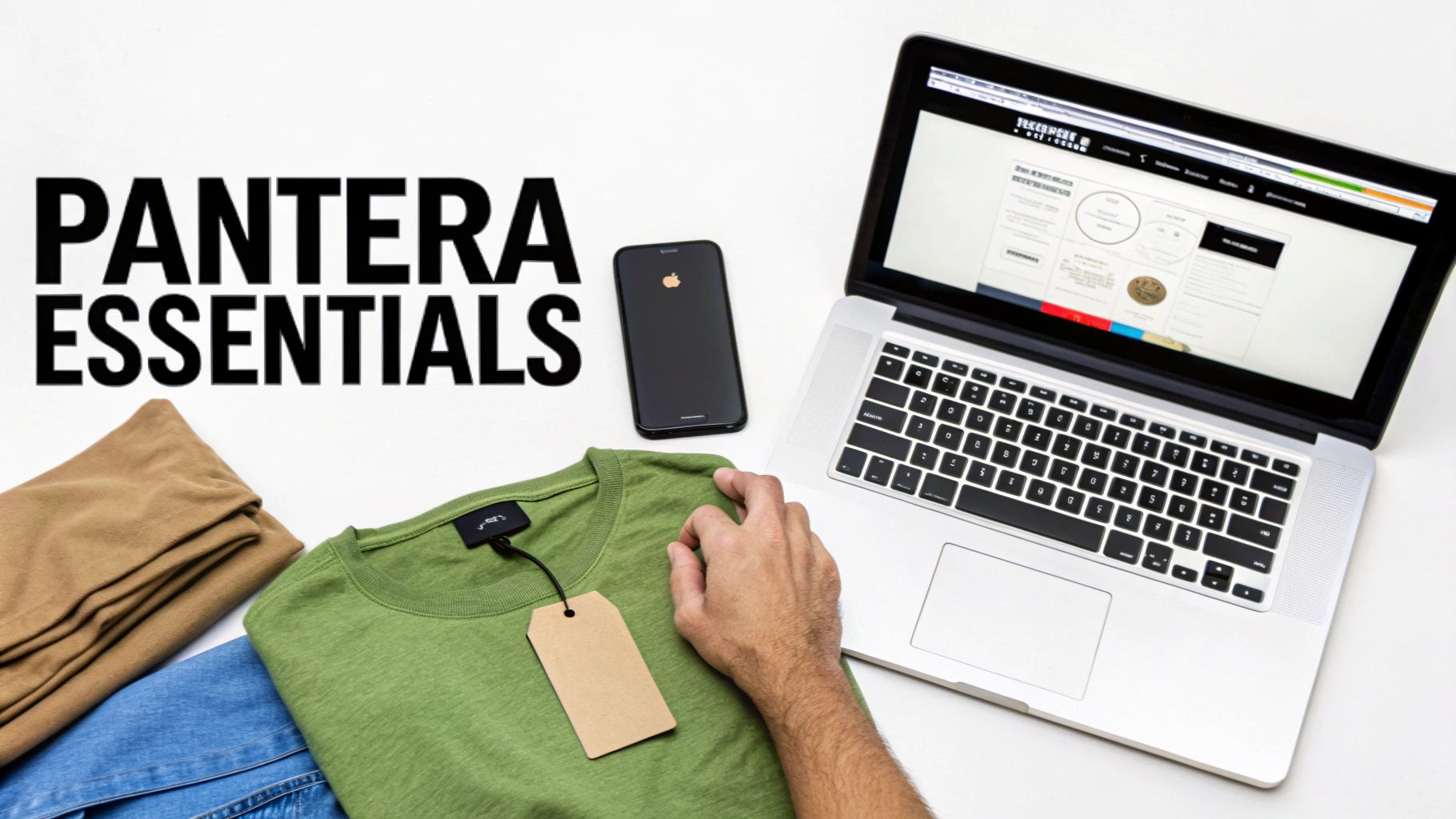
The clean layout points you straight to the important stuff, making it easy to find those foundational pieces or just browse what’s new.
Applying the Smart Shopping Checklist
Before you even think about hitting 'add to cart', it's time to zero in on the details. PANTERA STORES offers detailed sizing guides for their gear, which is an absolute must for getting the fit right when you can't try things on. Compare their charts with your own measurements, and you can pick your size with confidence.
Finally, keep an eye out for those all-important trust signals we covered earlier:
- Clear Policies: You'll find their shipping and return policies are straightforward and easy to locate, giving you that crucial peace of mind.
- Secure Payments: They offer a range of secure payment options, from the usual credit cards to services like Klarna and PayPal.
- Social Proof: Check out the customer reviews. They give you honest, real-world feedback on everything from the fit to the fabric quality.
By working through these steps, you stop being a passive browser and become a strategic shopper. You’re actively using the store’s layout and features to build a wardrobe that actually works for you.
Got Questions About Men's Clothing Stores? We've Got Answers.
Stepping into the world of menswear can feel like a maze, especially when you're just trying to make smart choices. To tie everything together, I've pulled together some of the most common questions guys have when they're trying to find the right men clothing stores. Think of this as your final cheat sheet.
These are the real-world hurdles we all face, and getting them right is what separates a frustrating shopping trip from building a wardrobe you’re actually proud of.
How Do I Nail My Sizing When Shopping Online?
Figuring out your size online can feel like a total shot in the dark, but it doesn't have to be. A couple of simple habits will get you a perfect fit almost every time. First, always check the brand's own sizing chart—don't just assume a "medium" is a medium everywhere. Grab a flexible tape measure and get your real chest, waist, and inseam numbers.
Here's the pro tip, though: dig into the customer reviews. Real-world feedback is gold. Look for comments like "runs a bit small" or "true to size," as they come from people who've already done the guesswork for you. Any decent store will back up their charts with a no-fuss return policy, giving you a safety net if things aren't quite right.
What Are the First Three Things I Should Buy for a New Wardrobe?
If you're starting from square one, you need a solid foundation. Don't get distracted by the flashy stuff. Instead, lock in these three workhorses first:
- A Few Great Neutral T-Shirts: A set of perfectly fitting tees in white, black, and grey are the glue that holds countless outfits together.
- One Pair of Killer Dark-Wash Jeans: A classic pair of dark denim is the ultimate chameleon. You can dress it up for a night out or keep it casual for the weekend.
- A Go-To Lightweight Jacket: A simple bomber or a clean-cut field jacket is the layering piece you'll reach for again and again. It just works.
Should I Splurge on Basics or Buy Cheap, Trendy Pieces?
This one's easy: for long-term satisfaction, your money is almost always better spent on high-quality basics. These are the items you'll wear constantly, so you need them to last and feel good. A simple way to think about it is cost-per-wear. That £80 jumper you wear 100 times is a much better deal than the £20 one that falls apart after five washes.
Trendy items are fun, but their moment in the sun is brief. It makes way more sense to treat them as cheap thrills. Put the serious part of your budget toward timeless, well-made staples that will look great for years.
Ready to put all this into action? Take a look at the collections over at PANTERA STORES and start building a wardrobe that actually works for you, not against you. Discover your new essentials today.